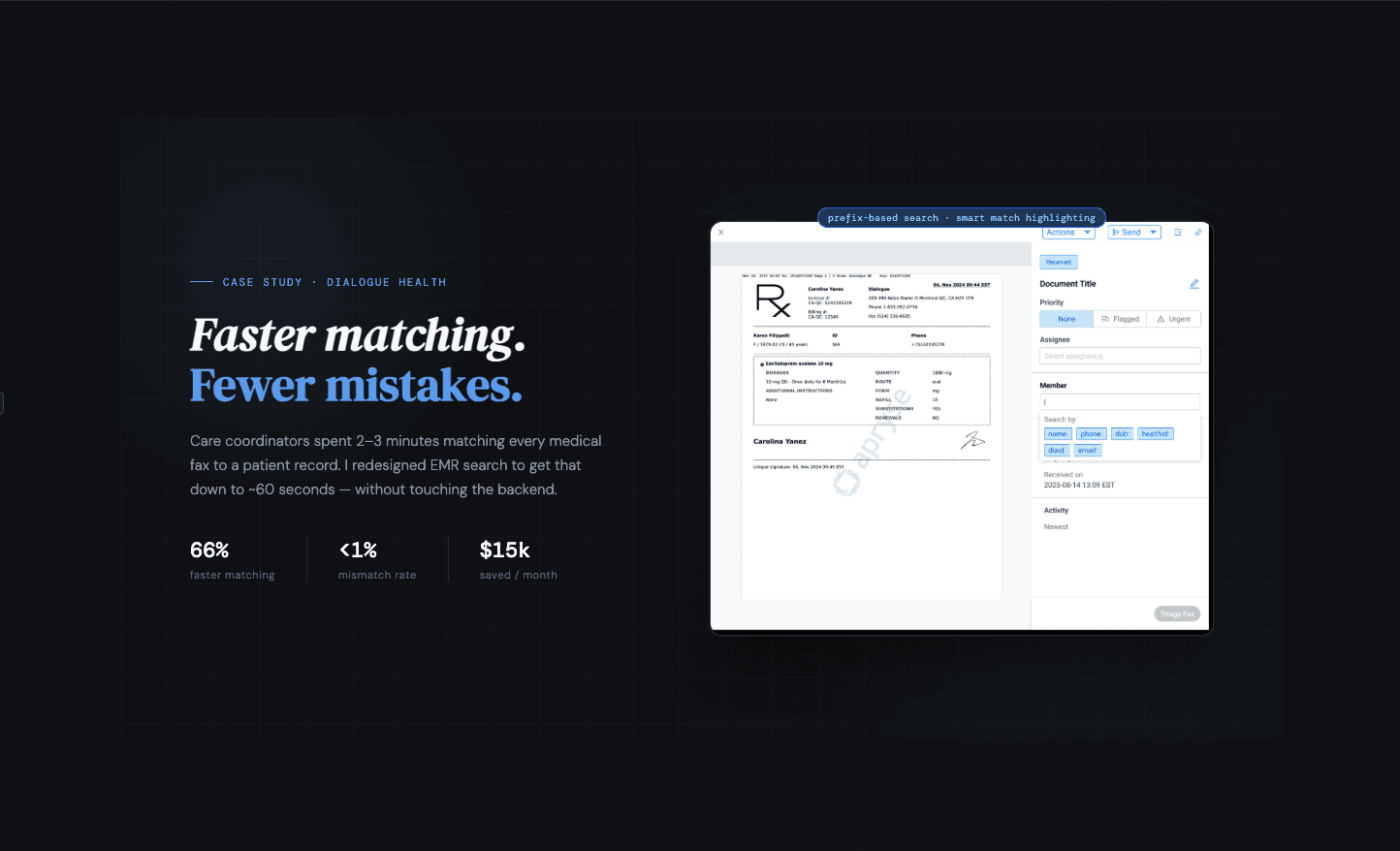
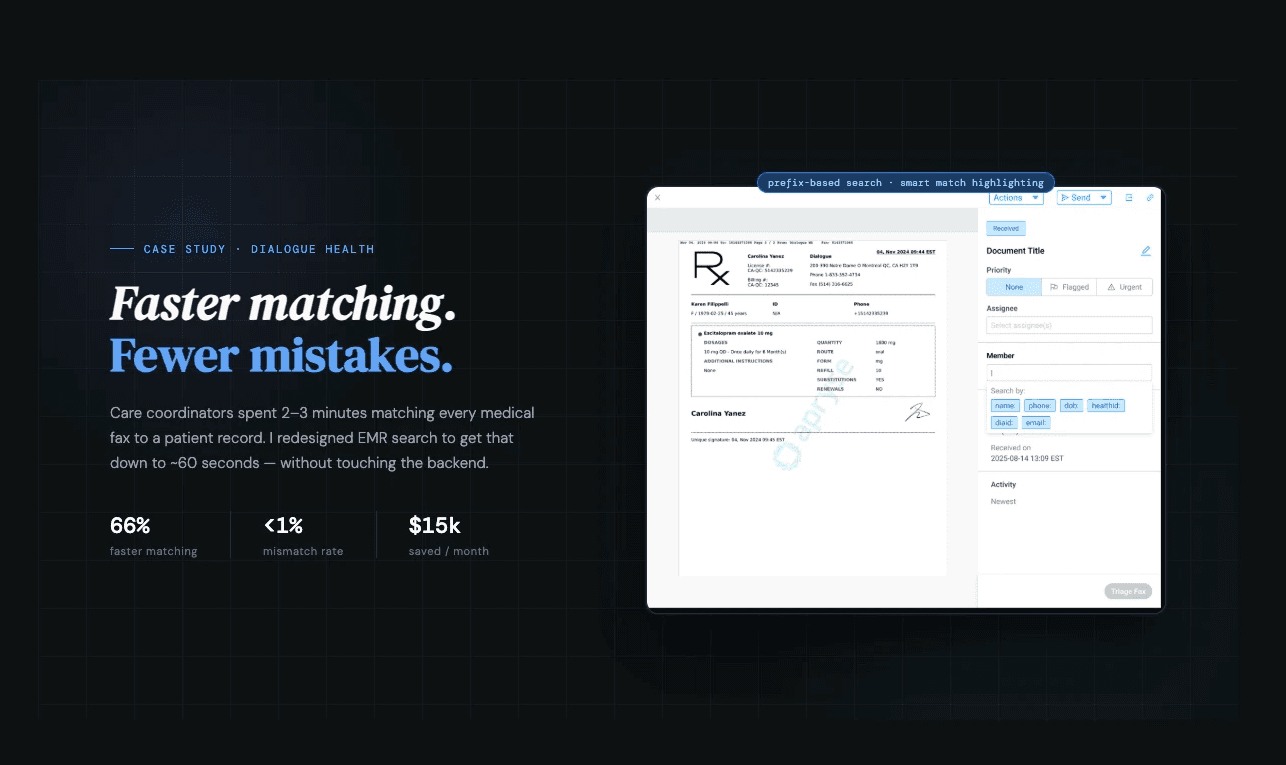
Care coordinators were spending 2–3 minutes manually matching medical faxes to patient records a slow, error-prone process with privacy risks. I led end-to-end research and design to transform this into a confident ~60-second workflow.
team:
ROLE:
Product Designer
timeline:
4 months
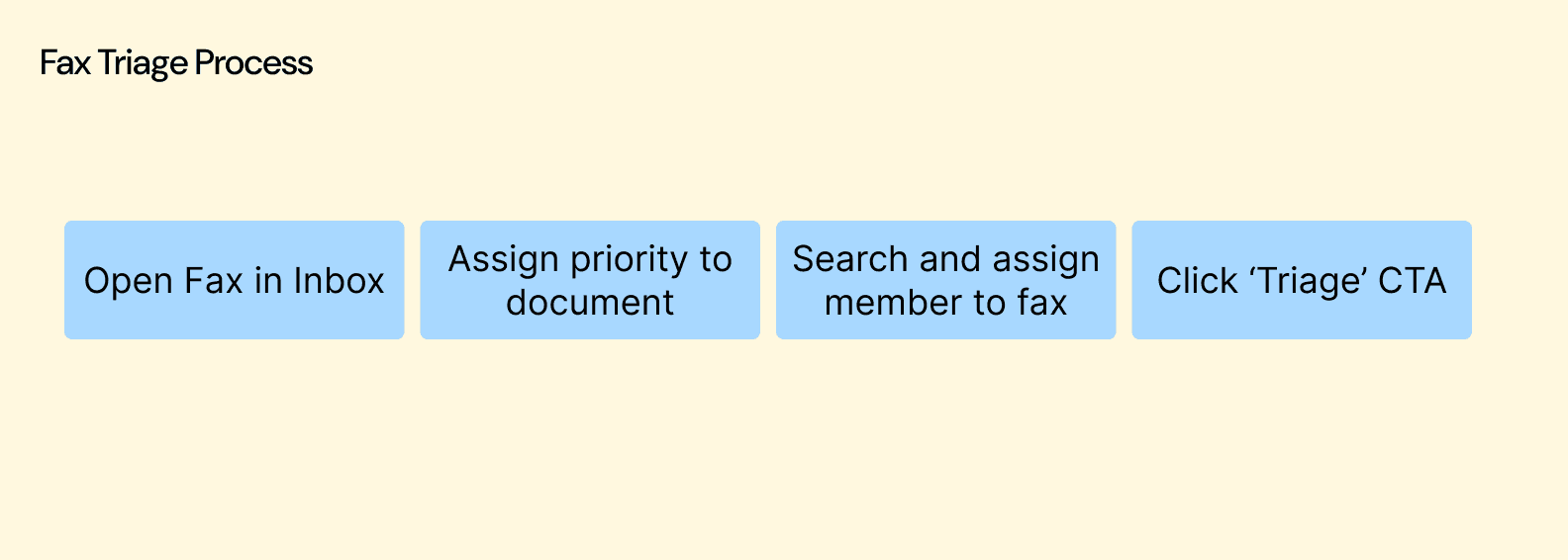
Receive fax with limited identifiers
Search name → multiple similar results
Open 5–6 profiles in tabs
Manually compare DOB, address, phone
Second-guess the decision
Repeat for the next fax
Mariah (Care Coordinator)
My approach
8
SHADOWING SESSIONS
12 CONTEXTUAL INTERVIEWS
WORKFLOW MAPPING
ANALYZED 100+ SUPPORT TICKETS
Key insights
Constraint That Shaped the Solution
Constraints to consider:
I explored three approaches: search-type dropdown, radio button selectors, and prefix-based search — evaluating each against usability, speed, and engineering feasibility.
Prefix-based search was the clear direction: familiar pattern, minimal backend lift, and it supported both novice and power users without adding friction to every search.
Concept 3: Prefix Based Search
Early prototype of prefix-based search logic
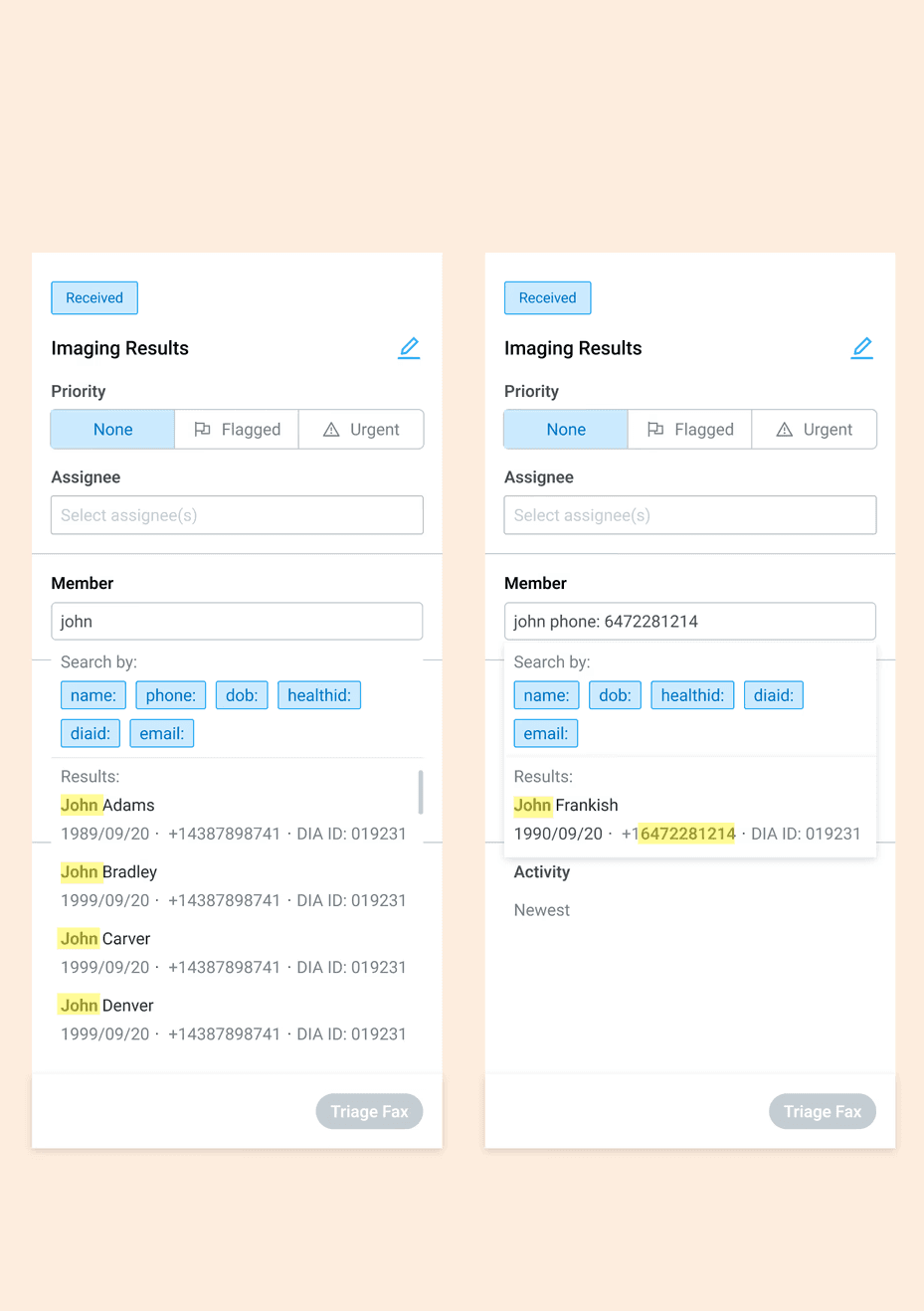
Prefix search with smart match highlighting and stacked filters
How the solution works:
You don't know how amazing this is. Our team is blasting through triaging now.
james (Care Coordinator)
Early OCR tests showed ~95% accuracy for auto-assignment — validating that automation could eventually eliminate manual triage for structured faxes entirely. This work helped spark broader automation initiatives across the product.
Long-term, database unification would enable true auto-detection without prefixes. The user value validated here is now helping prioritize that infrastructure investment.
Thanks for reading!

2026 All Rights Reserved